

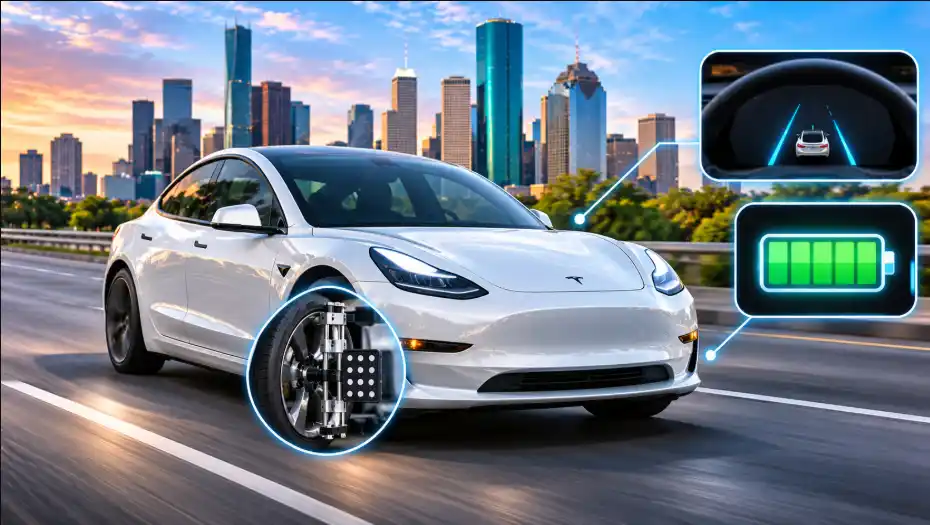
You charge your Tesla, get on the road, and notice something unusual. Your battery seems to drain faster than usual, your steering wheel doesn’t sit quite straight, or your vehicle feels like it’s working harder to maintain its direction.
Naturally, you start wondering whether something is wrong with the battery.
But what if the problem isn’t the battery at all?
Your Tesla’s wheel alignment could be one of the things worth checking.
Wheel alignment affects how your tires meet the road. When the wheels don’t point in the correct direction, the tires may experience additional friction and uneven wear. Over time, this can affect driving efficiency, handling, and tire life.
But what about Autopilot? Can incorrect wheel alignment interfere with Tesla’s driver-assistance features?
The answer requires a little more explanation. Wheel alignment, steering calibration, and Autopilot camera calibration are different things. They can relate to vehicle handling and service procedures, but they don’t perform the same job.
In this guide, we’ll explain how Tesla wheel alignment can affect battery efficiency, why it matters for driving performance, and what Tesla owners should understand about Autopilot and calibration.
If you drive a Tesla in Houston, we’ll also explain when a professional four-wheel alignment inspection may be worth considering.
Quick Answer: Does Tesla Wheel Alignment Affect Battery Range and Autopilot?
Yes, incorrect wheel alignment can affect your Tesla’s driving efficiency and handling.
When the wheels don’t maintain the correct alignment, the tires may experience additional rolling resistance. The vehicle may need more energy to maintain the same driving conditions, which can contribute to increased energy consumption.
However, wheel alignment is only one possible factor affecting Tesla battery range. Tire pressure, speed, temperature, road conditions, driving habits, and climate control can also influence energy consumption.
Does alignment directly control Autopilot? No.
Tesla Autopilot relies on the vehicle’s driver-assistance systems, including its cameras and other supporting hardware. Camera calibration is a separate process from wheel alignment.
However, incorrect alignment can affect how the vehicle tracks on the road. If your Tesla pulls to one side or the steering wheel sits off-center, you should investigate the problem rather than assume Autopilot will compensate for it.
1. How Does Tesla Wheel Alignment Work?
Before discussing battery range and Autopilot, it’s helpful to understand what wheel alignment actually does.
Wheel alignment refers to the adjustment of a vehicle’s wheel angles so that the tires maintain the intended position according to the manufacturer’s specifications.
A technician typically examines three important alignment angles:
- Camber: The inward or outward tilt of the wheel when viewed from the front or rear.
- Toe: The direction in which the tires point when viewed from above.
- Caster: The forward or backward angle of the steering axis when viewed from the side.
These measurements work together to support proper handling and predictable vehicle behavior.
When the angles fall outside the recommended specifications, the tires may not roll as intended.
You might notice uneven tire wear, a vehicle that pulls to one side, or a steering wheel that doesn’t remain centered.
Tesla also recommends wheel alignment when you notice uneven tire wear or when the vehicle pulls left or right while the steering wheel is held straight.
You can read the manufacturer’s recommendations in the official Tesla Vehicle Maintenance Guide.
2. Can Incorrect Wheel Alignment Reduce Tesla Battery Range?
This is one of the most interesting questions for Tesla owners.
Unlike a gasoline-powered vehicle, your Tesla depends on stored electrical energy. Every additional demand on the drivetrain can influence how efficiently the vehicle uses that energy.
One factor worth understanding is rolling resistance.
Rolling resistance is the force that opposes a tire as it rolls along the road. Tire construction, pressure, load, road surface, and operating conditions all influence it.
When wheel alignment falls outside the recommended specifications, the tires may scrub or drag against the road instead of rolling as intended.
That additional resistance can contribute to higher energy consumption.
How Does Misalignment Affect Energy Consumption?
Imagine that one or more wheels point slightly away from the direction in which the vehicle travels.
As your Tesla moves forward, the tires may experience additional friction against the road.
The vehicle still moves, but some energy goes toward overcoming that resistance rather than moving the vehicle efficiently.
Over time, this can contribute to:
- Higher energy consumption.
- Reduced driving efficiency.
- Uneven tire wear.
- Changes in handling.
- Additional tire replacement costs.
The actual effect depends on how far the alignment angles are outside the recommended specifications and the vehicle’s driving conditions.
It’s important not to assume that every decrease in Tesla battery range comes from alignment. If your energy consumption changes suddenly, tire pressure, temperature, speed, driving habits, and other vehicle conditions deserve attention too.
Can Proper Alignment Improve Tesla Range?
Correcting an alignment problem can help reduce unnecessary tire scrubbing and support more efficient tire rolling.
However, no technician should promise a specific percentage increase in battery range simply from performing wheel alignment.
The improvement depends on the original condition of the vehicle and the other factors affecting energy consumption.
The practical benefit is that proper alignment helps your tires work as intended and supports consistent vehicle handling.
3. How Incorrect Camber and Toe Can Affect Tesla Efficiency
Not every alignment problem affects the tires in the same way.
Two measurements deserve particular attention when discussing tire wear and potential rolling resistance: camber and toe.
Excessive Negative Camber
Negative camber means the top of the wheel leans inward toward the center of the vehicle.
A certain amount is normal, depending on the vehicle’s design and specifications.
However, excessive negative camber can place additional load on the inner shoulder of the tire.
Over time, the inside edge may wear faster than the rest of the tread.
This reduces the tire’s usable life and can lead to premature replacement.
Incorrect Toe Alignment
Toe alignment describes whether the front edges of the tires point toward or away from each other.
When toe settings fall outside the recommended specifications, the tires may scrub against the road as the vehicle travels forward.
This can create additional friction and uneven tread wear.
For Tesla owners concerned about battery efficiency, toe alignment deserves attention because unnecessary tire scrubbing can contribute to additional rolling resistance.
A computerized alignment inspection can help identify whether the camber and toe measurements fall within the appropriate specifications.
4. Does Wheel Alignment Affect Tesla Autopilot?
Let’s address the question directly.
Wheel alignment and Autopilot are not the same system.
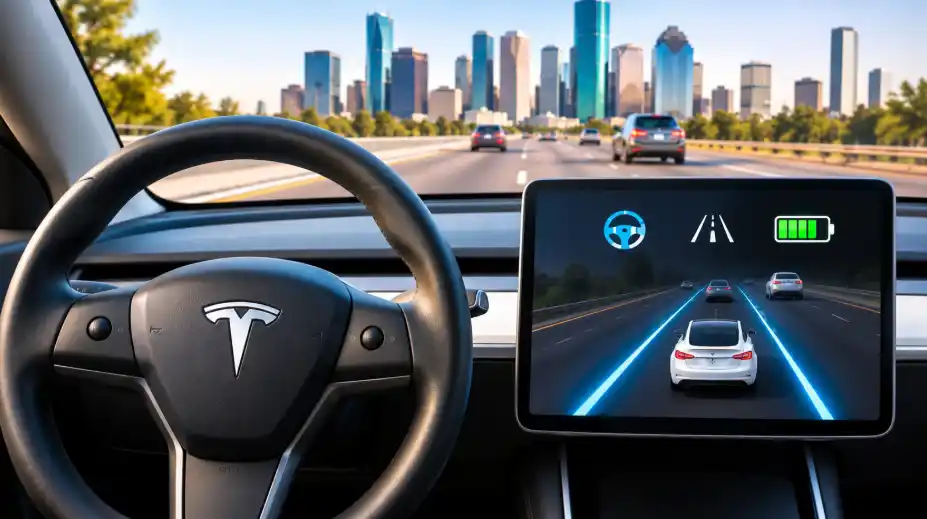
Tesla Autopilot is a driver-assistance system that uses vehicle hardware and software to support functions such as traffic-aware cruise control and lane-centering, depending on the vehicle and configuration.
The vehicle’s cameras play an important role in its driver-assistance functionality.
Wheel alignment, on the other hand, concerns the physical positioning of the wheels.
So, does incorrect alignment automatically disable Autopilot?
No. A misaligned wheel does not automatically mean that the Autopilot cameras have lost calibration.
However, incorrect alignment can affect how the vehicle tracks along the road.
For example, imagine your Tesla consistently pulls slightly to the right while you’re driving on a straight road.
You may notice that the steering wheel doesn’t sit in its normal centered position.
That is a handling concern worth investigating. It doesn’t automatically prove that Autopilot has a calibration problem.
If your vehicle displays an Autopilot or driver-assistance warning, follow the message on the touchscreen and consult Tesla’s service guidance.
Don’t assume a wheel alignment adjustment will resolve a camera calibration warning.
What Actually Controls Tesla Autopilot Calibration?
Tesla’s camera system requires appropriate calibration for certain driver-assistance features to operate.
According to Tesla’s Model 3 camera-calibration guidance, some camera-related repairs and other service situations can require the vehicle to complete a self-calibration process.
For the Model 3 procedure described by Tesla, calibration typically completes after driving approximately 20–25 miles, although road and environmental conditions can affect the distance.
Until calibration completes, certain driver-assistance and active safety features may remain unavailable.
You can read more in Tesla’s official Camera Calibration Guide.
5. Wheel Alignment vs. Steering Calibration vs. Camera Calibration
These three terms can sound similar, but they describe different procedures.
Understanding the differences can help you avoid paying for the wrong service.
Wheel Alignment
Wheel alignment measures the physical angles of the vehicle’s wheels.
A technician checks measurements such as camber, caster, and toe against the applicable manufacturer specifications.
The purpose is to support proper tire positioning, handling, and tire life.
Steering Calibration
Steering-related calibration or diagnostic procedures concern specific steering-system components and measurements.
Tesla Service Mode includes steering-related service functions, such as steering column calibration, depending on the vehicle’s model, year, software, and hardware.
These are specific service procedures. They should not be confused with a routine wheel alignment adjustment.
Autopilot Camera Calibration
Camera calibration concerns the vehicle’s camera system.
When certain camera-related repairs take place, Tesla may require a camera calibration process before applicable driver-assistance features become available.
This process is separate from adjusting camber or toe.
| Service | Main purpose |
|---|---|
| Wheel alignment | Correct wheel positioning |
| Steering calibration | Calibrate specific steering-related components or measurements |
| Camera calibration | Calibrate the vehicle’s camera system |
Important: A four-wheel alignment does not automatically perform steering calibration or Autopilot camera calibration. The correct procedure depends on the actual fault, repair, and vehicle configuration.
For technical reference, see Tesla’s Service Mode User Guide.
6. What Is Tesla 4-Wheel Alignment and Why Does It Matter?
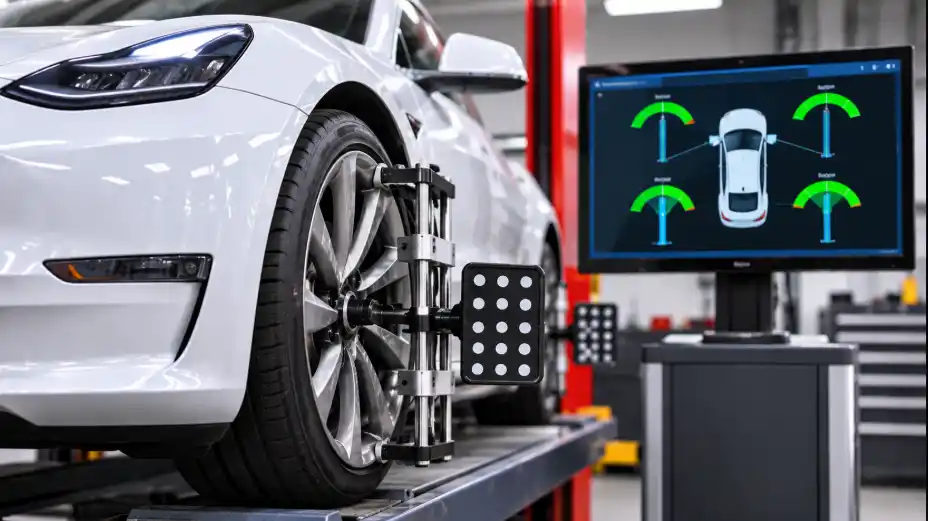
When people talk about Tesla wheel alignment, they often focus only on the front wheels.
However, a proper four-wheel alignment inspection considers the positioning of all four wheels.
This matters because the rear wheels also influence how the vehicle tracks along the road.
During a four-wheel alignment inspection, a technician can measure:
- Front camber.
- Front toe.
- Rear camber.
- Rear toe.
- Other applicable alignment measurements.
The exact adjustment options depend on the Tesla model, suspension configuration, and component condition.
Why Check All Four Wheels?
Imagine that the front wheels appear correctly positioned, but the rear alignment measurements fall outside the recommended specifications.
The vehicle may not track as intended, even though the front measurements look acceptable.
A four-wheel alignment inspection helps the technician evaluate the overall wheel positioning rather than focusing on only one axle.
If you’re experiencing uneven tire wear, an off-center steering wheel, or your Tesla pulling to one side, a professional inspection can help identify the problem.
Learn more about our Tesla 4-wheel alignment service in Houston.
7. Signs Your Tesla May Need a Wheel Alignment Inspection
Not every alignment problem produces an obvious warning on the touchscreen.
Sometimes, the first signs appear while you’re driving.
Here are some things worth watching.
Your Tesla Pulls to One Side
If your vehicle consistently drifts left or right while you’re driving on a level road, incorrect alignment may be one possible cause.
Tire pressure, road conditions, and other mechanical problems can also contribute.
Your Steering Wheel Doesn’t Sit Straight
When you drive straight, the steering wheel should normally sit in its intended centered position.
If it appears noticeably off-center, an alignment inspection may help identify the cause.
Your Tires Wear Unevenly
Check the inner, middle, and outer sections of the tire tread.
If one area wears faster than the others, the vehicle may have an alignment or suspension problem.
Your Tesla Feels Less Stable
You may notice that your vehicle doesn’t feel as predictable as it used to, particularly when traveling at highway speeds.
This doesn’t automatically confirm an alignment issue, but it’s worth investigating.
Your Energy Consumption Changes
If your Tesla starts using more energy than usual under similar driving conditions, check the tire pressure and review your driving conditions.
If you also notice unusual tire wear or steering symptoms, wheel alignment should be part of the inspection.
8. Other Factors That Can Reduce Tesla Battery Range
Before blaming wheel alignment for reduced battery range, remember that several other factors influence electric vehicle efficiency.
Here are some common examples.
Tire Pressure
Incorrect tire pressure can affect rolling resistance and tire performance.
Underinflated tires may require more energy to roll.
Check the recommended cold tire pressure for your specific Tesla model and tire configuration.
Driving Speed
Driving at higher speeds generally requires more energy because aerodynamic drag increases.
This is one reason highway energy consumption can differ significantly from city driving.
Temperature
Cold weather can affect battery performance and energy consumption.
Heating the cabin and conditioning the battery can also increase energy use.
Driving Habits
Aggressive acceleration, frequent high-speed driving, and hard braking can influence overall efficiency.
Tire Type and Condition
Different tire compounds, tread patterns, sizes, and conditions can affect rolling resistance.
Worn or damaged tires may also create additional problems that deserve inspection.
A proper diagnosis should consider these factors rather than treating wheel alignment as the only possible explanation for reduced range.
9. How a Professional Tesla 4-Wheel Alignment Inspection Works
If you suspect an alignment problem, the next step is to have the vehicle inspected.
A professional alignment service should focus on identifying the actual issue rather than simply changing wheel angles without understanding the vehicle’s condition.
At Zero Pull Alignment, our approach focuses on computerized alignment measurements and relevant suspension inspections.
The process can include the following steps.
Step 1: Initial Vehicle Inspection
We begin by discussing the symptoms you’ve noticed.
We also inspect the tires for uneven tread wear and check relevant steering and suspension components.
Step 2: Computerized Alignment Measurements
We use a computerized alignment system to measure the vehicle’s wheel angles.
These measurements help identify whether the alignment falls outside the applicable specifications.
Step 3: Review of Factory Specifications
We compare the readings with the appropriate specifications for your specific Tesla model and configuration.
Step 4: Applicable Alignment Adjustments
If the measurements require correction, our technicians determine which adjustments are possible based on the vehicle’s suspension design and component condition.
Step 5: Final Measurement Verification
After making applicable adjustments, we check the measurements again.
A before-and-after report can help you understand the results of the alignment service.
Our goal is to help Tesla owners identify alignment-related concerns and maintain proper wheel positioning.
10. When Should You Get Your Tesla Wheel Alignment Checked?
You don’t need to wait until your tires become severely worn before considering an inspection.
Consider scheduling a wheel alignment check if:
- Your Tesla pulls left or right while driving straight.
- The steering wheel sits off-center.
- Your tires show uneven tread wear.
- You’ve recently hit a pothole or curb.
- You’ve replaced your tires.
- Suspension or steering components have been repaired.
- Your vehicle feels different during normal driving.
Tesla recommends wheel alignment when you notice uneven tire wear or when the vehicle pulls left or right while the steering wheel is held straight.
Tesla also recommends alignment after installing a new set of tires.
You can check the latest maintenance recommendations for your vehicle through Tesla’s official support documentation.
11. Why Choose Zero Pull Alignment for Tesla Wheel Alignment in Houston?
If you own a Tesla in Houston and have noticed unusual tire wear, steering problems, or possible alignment issues, getting the vehicle inspected can help you understand what’s happening.
At Zero Pull Alignment, we provide wheel alignment services for drivers in Houston, TX.
We focus on:
- Computerized wheel alignment measurements.
- Camber and toe evaluation.
- Relevant steering and suspension inspections.
- Applicable alignment adjustments.
- Before-and-after measurement reports.
Whether you drive a Model 3, Model Y, Model S, Model X, or Cybertruck, the correct alignment specifications depend on your vehicle’s model and configuration.
We don’t assume every Tesla has the same alignment requirements.
Instead, we use the applicable measurements and inspect the relevant components before determining what needs attention.
If your Tesla needs a professional alignment inspection, learn more about our service:
12. Final Thoughts: Keep Your Tesla Efficient, Stable, and Properly Aligned
Your Tesla’s battery range and driving performance depend on several factors.
Wheel alignment is one of the maintenance areas worth checking, particularly when you notice uneven tire wear, steering problems, or your vehicle pulling to one side.
Incorrect alignment can contribute to additional tire friction and may affect driving efficiency. Correcting the problem can help your tires roll as intended and support predictable handling.
But remember, wheel alignment does not calibrate Autopilot cameras, and steering-related service procedures are not automatically required after every alignment.
If your Tesla displays a driver-assistance warning, follow the vehicle’s instructions and have the relevant system inspected.
If you’re experiencing alignment-related symptoms in Houston, Zero Pull Alignment can help you investigate the condition of your vehicle’s wheel alignment.
Schedule Your Tesla Wheel Alignment in Houston
Don’t ignore uneven tire wear or unusual steering behavior.
Contact Zero Pull Alignment to discuss your Tesla’s alignment concerns and arrange an inspection.
Zero Pull Alignment
Houston, TX
Phone: (346) 916-2567
Learn More About Tesla Wheel Alignment
Frequently Asked Questions About Tesla Wheel Alignment, Autopilot, and Battery Range
1. Can incorrect wheel alignment reduce Tesla battery range?
It can contribute to increased energy consumption. Incorrect alignment may cause additional tire scrubbing and rolling resistance. However, the actual effect depends on the severity of the alignment problem and other driving conditions.
2. Does wheel alignment affect Tesla Autopilot?
Wheel alignment and Autopilot camera calibration are separate systems. Incorrect alignment can affect vehicle tracking and handling, but it doesn’t automatically mean the Autopilot cameras are miscalibrated.
3. Can a Tesla drive normally with incorrect wheel alignment?
A Tesla may still drive with incorrect alignment, but you might notice pulling, an off-center steering wheel, or uneven tire wear. Have the vehicle inspected if you notice these symptoms.
4. Does Tesla require four-wheel alignment?
A four-wheel alignment inspection evaluates the positioning of all four wheels. Whether adjustments are necessary depends on the vehicle’s measurements, model, and suspension configuration.
5. Does wheel alignment improve Tesla driving efficiency?
Correcting an alignment problem can reduce unnecessary tire scrubbing and support more efficient rolling. However, it cannot guarantee a specific improvement in battery range.
6. Is steering calibration the same as wheel alignment?
No. Wheel alignment measures and adjusts wheel positioning. Steering calibration concerns specific steering-system components or measurements. The required procedure depends on the vehicle and service condition.
7. Does Tesla Autopilot need recalibration after wheel alignment?
A routine wheel alignment does not automatically require Autopilot camera recalibration. Camera calibration is generally associated with specific camera-related service procedures or other situations described by Tesla.
8. What causes Tesla battery range to decrease?
Several factors can affect battery range, including driving speed, temperature, tire pressure, road conditions, driving habits, climate control, and tire rolling resistance.
9. How do I know if my Tesla needs wheel alignment?
Look for uneven tire wear, steering-wheel misalignment, or the vehicle pulling left or right while driving straight. These are among the symptoms Tesla identifies as reasons to consider alignment.
10. Where can I get Tesla wheel alignment in Houston?
Zero Pull Alignment provides wheel alignment services in Houston, TX. Call (346) 916-2567 to discuss your Tesla’s alignment concerns and schedule an inspection.
Still have questions about your Tesla’s alignment or driving efficiency? Contact Zero Pull Alignment at (346) 916-2567.
