


Houston roads can be unpredictable. One moment you are driving comfortably, and the next, your vehicle hits a deep pothole that sends a noticeable jolt through the suspension.
Although some pothole impacts may seem minor, they can affect your vehicle’s wheel alignment, tires, wheels, or suspension components. In certain situations, you might notice changes in steering or handling immediately. However, other problems may develop gradually.
Knowing the signs your car needs an alignment can help you recognize potential issues before they contribute to additional tire wear or uncomfortable driving.
In this guide, we will explain five common warning signs to watch for after hitting a Houston pothole and why a professional inspection may be necessary.
1. Your Steering Wheel Is Crooked When Driving Straight
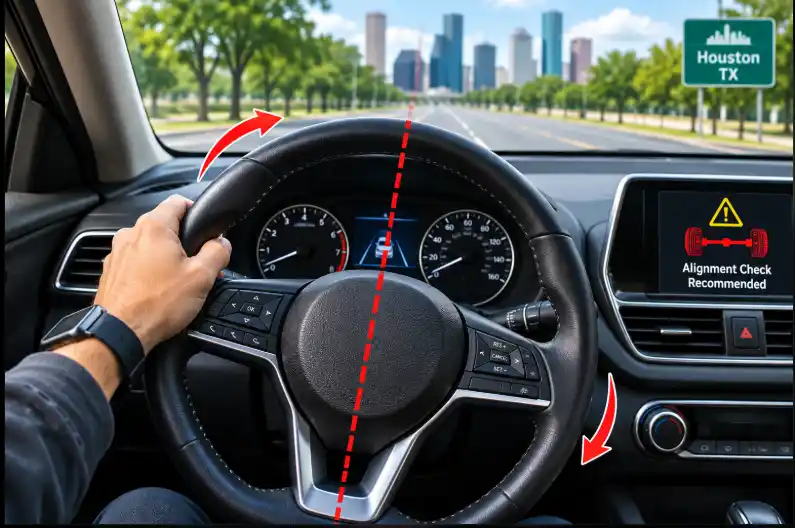
One of the most noticeable signs of a possible alignment problem is a crooked steering wheel.
After hitting a pothole, your vehicle’s wheel angles may shift outside the manufacturer’s recommended specifications. As a result, the steering wheel might no longer sit straight when the vehicle travels in a straight line.
For example, you may notice that your car moves straight while the steering wheel remains slightly tilted to the left or right.
This condition can indicate an alignment issue, particularly when it appears immediately after a pothole impact.
However, a crooked steering wheel does not always mean alignment is the only problem. Damaged steering or suspension components may also affect steering position.
What to watch for:
- The steering wheel sits off-center while driving straight.
- You need to hold the steering wheel at an unusual angle.
- The steering position feels different after hitting a pothole.
If you notice these changes, consider having your vehicle inspected rather than assuming the problem will correct itself.
2. Your Vehicle Pulls to the Left or Right
Does your car seem to drift toward one side when you are trying to drive straight?
This is another common warning sign that may indicate your vehicle needs an alignment check.
A strong pothole impact can affect suspension or steering components and potentially change wheel alignment angles. Consequently, your vehicle may no longer track straight as expected.
You might notice this problem during everyday driving, especially when traveling on a reasonably level road.
Nevertheless, alignment is not the only possible cause. Uneven tire pressure, tire damage, brake problems, and road conditions can also cause a vehicle to pull to one side.
Look for these symptoms:
- Your vehicle consistently drifts left or right.
- You need to make frequent steering corrections.
- The car feels less stable than it did before the pothole impact.
A professional inspection can help determine whether the problem comes from incorrect alignment angles or another mechanical issue.
3. Your Tires Start Wearing Unevenly
Uneven tire wear is one of the most important signs your car needs an alignment inspection.
When wheel angles are outside the recommended specifications, tires may not maintain the intended contact with the road. Over time, certain areas of the tread can wear faster than others.
For example, you might notice excessive wear along the inside or outside edge of a tire.
After hitting a Houston pothole, it is worth checking your tires for unusual changes in tread condition.
Common warning signs include:
- Excessive wear along the inside edge.
- More wear on the outside edge than the center.
- Different wear patterns between the front tires.
- Unusual feathering or irregular tread wear.
Keep in mind that uneven tire pressure, worn suspension parts, and tire-related problems can also contribute to irregular wear.
Therefore, checking alignment along with tire and suspension condition can help identify the actual cause.
Important: If you notice exposed cords, bulges, cuts, or a significant loss of tire pressure after hitting a pothole, avoid driving on the damaged tire. Have it inspected promptly.
4. Your Steering Feels Loose, or Your Car Handles Differently
A pothole impact can sometimes affect the way your vehicle responds to steering inputs.
For instance, your steering may feel less precise than before. The vehicle might also feel unstable or require more corrections when traveling along a straight road.
These changes can be associated with incorrect wheel alignment. However, damaged suspension or steering components may produce similar symptoms.
Pay attention if you experience:
- Unusual steering response.
- Reduced directional stability.
- A vehicle that feels less predictable during normal driving.
- Changes in steering behavior after a pothole impact.
In addition, listen for unusual clunking or knocking sounds when driving over bumps. These noises may indicate a damaged or loose suspension component rather than an alignment issue alone.
Because steering and suspension problems can affect vehicle control, arrange an inspection if these symptoms appear.
5. Your Vehicle Vibrates After Hitting a Pothole
Not every vibration after a pothole impact is caused by wheel alignment.
In fact, a bent wheel, damaged tire, or tire imbalance can often be responsible for noticeable vibration.
For example, if you feel shaking through the steering wheel at highway speeds, the impact may have damaged a wheel or affected the tire assembly.
Incorrect wheel alignment can contribute to handling problems and uneven tire wear. However, it should not automatically be considered the cause of every vibration.
Watch for these possible warning signs:
- Steering wheel vibration at certain speeds.
- Shaking that becomes more noticeable as speed increases.
- Unusual vibration through the seat or floor.
- A visible bend in the wheel or damage to the tire.
A proper inspection should include the tires, wheels, suspension, and alignment measurements. This approach helps identify the source instead of treating only one possible symptom.
Why Houston Potholes Can Affect Your Wheel Alignment
Potholes form when road surfaces deteriorate, allowing sections of pavement to break apart and create uneven depressions.
When a vehicle strikes one of these areas, the impact travels through the tire, wheel, and suspension system.
Depending on the severity and angle of the impact, several problems may occur:
1. Wheel Alignment Changes
A strong impact may affect suspension or steering components, causing wheel angles to move outside the manufacturer’s specifications.
2. Bent or Damaged Wheels
Hitting a deep pothole can damage the wheel itself. In some cases, a bent wheel may also contribute to vibration or air leakage.
3. Tire Damage
The impact may cause sidewall bulges, cuts, internal damage, or other tire problems.
4. Suspension Component Damage
Certain suspension components may become bent, damaged, or loose following a significant impact.
Not every pothole causes these problems. Nevertheless, checking your vehicle after a hard impact can help identify damage before it becomes more serious.
What Should You Do After Hitting a Houston Pothole?
If your vehicle experiences a strong pothole impact, taking a few simple steps can help you identify possible problems.
Step 1: Check Your Tires and Wheels
Look for visible tire damage, sidewall bulges, cuts, and unusual changes in tire pressure.
Also, inspect the wheels for visible bends or damage. If you suspect a tire or wheel is unsafe, avoid driving until it has been inspected.
Step 2: Pay Attention to Steering Behavior
Notice whether your steering wheel remains centered while driving straight.
Additionally, check whether your vehicle consistently pulls to one side or feels different from before the impact.
Step 3: Watch for Unusual Vibrations or Sounds
Pay attention to steering wheel vibration, shaking, clunking, or other unusual noises.
These symptoms may indicate tire, wheel, suspension, or steering problems that require professional attention.
Step 4: Schedule a Professional Inspection
If you notice any warning signs, arrange an inspection with a qualified automotive service provider.
A professional evaluation can help determine whether your vehicle needs alignment adjustments, tire replacement, wheel repair, or suspension work.
How a Hunter 3D Alignment Check Can Help
When pothole damage is suspected, measuring your vehicle’s wheel angles is an important part of the inspection.
A Hunter 3D alignment system uses imaging technology and alignment targets to measure wheel positions and angles. These measurements can then be compared with the vehicle manufacturer’s specifications.
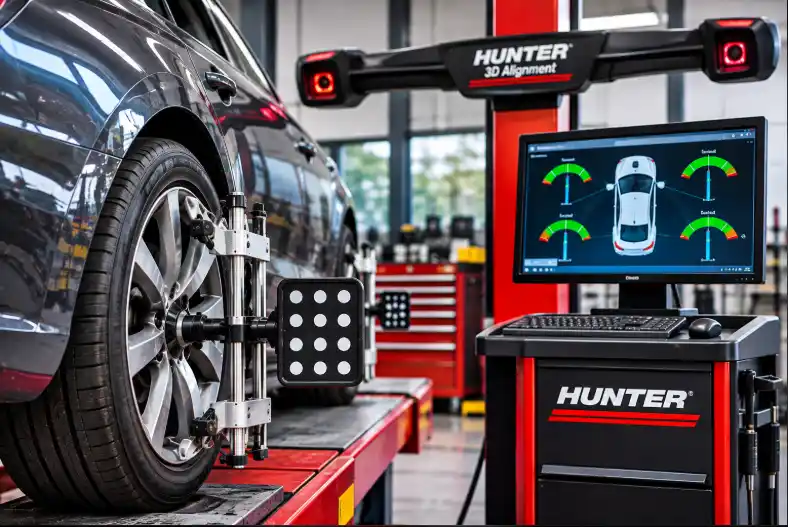
This process helps technicians evaluate important alignment settings, including:
- Camber: The inward or outward tilt of the wheels.
- Toe: The direction the wheels point relative to each other.
- Caster: The steering-axis angle that helps support steering stability and return-to-center behavior.
Based on the inspection results, a technician can determine whether alignment adjustments are necessary.
At Zero Pull Alignment, a Hunter 3D alignment check can help identify alignment-related concerns and evaluate whether your vehicle’s wheel angles meet the recommended specifications.
However, alignment measurements alone cannot identify every type of pothole damage. Tires, wheels, steering, and suspension components may also need to be inspected.
Get a Professional Wheel Alignment Service in Houston
Hitting a pothole does not always mean your vehicle needs an alignment. However, changes in steering, handling, tire wear, or vibration should not be ignored.
Recognizing the signs your car needs an alignment can help you take action before incorrect wheel angles contribute to additional tire wear.
If your vehicle has developed a crooked steering wheel, pulls to one side, or shows uneven tire wear after a pothole impact, consider scheduling a professional inspection.
Zero Pull Alignment provides wheel alignment services for drivers in Houston, TX.
Get your vehicle checked and find out whether alignment adjustments or additional repairs are necessary.
Call Zero Pull Alignment: (346) 916-2567
Visit our professional wheel alignment service page to learn more and schedule your appointment.
Frequently Asked Questions
1. Can hitting a pothole knock my car out of alignment?
Yes. A strong pothole impact can affect steering or suspension components and cause wheel alignment angles to move outside the manufacturer’s specifications. However, not every pothole impact results in an alignment problem.
2. What are the most common signs your car needs an alignment?
Common warning signs include a crooked steering wheel, pulling to one side, uneven tire wear, and changes in steering response. These symptoms can also be associated with tire, brake, or suspension problems, so an inspection is important.
3. How do I know if a pothole damaged my suspension?
Unusual clunking sounds, changes in handling, steering problems, and visible damage may indicate a suspension issue. A professional inspection is needed to identify the affected components.
4. Can a pothole cause uneven tire wear?
Yes. If the impact changes wheel alignment angles, certain areas of the tire tread may wear faster than others over time. However, tire pressure and suspension condition can also affect tread wear.
5. Should I get an alignment after hitting a pothole?
An alignment inspection is a sensible step after a significant pothole impact, particularly if you notice steering changes, pulling, or uneven tire wear. The inspection can determine whether adjustments are actually necessary.
6. Does wheel alignment fix vibration after hitting a pothole?
Not necessarily. Vibration may result from a bent wheel, damaged tire, or tire imbalance. Wheel alignment corrects wheel angles, so the source of the vibration should be identified before choosing a repair.
7. How long does a wheel alignment check take?
The time depends on the vehicle, its condition, and whether additional problems are discovered. A technician can provide a more accurate estimate after inspecting your vehicle.
8. Where can I get a wheel alignment check in Houston?
Zero Pull Alignment offers wheel alignment services in Houston, TX. Contact the shop to discuss your vehicle’s symptoms and available inspection options.
