

Your car should feel stable after hitting a bump, not continue bouncing down the road. Shocks and struts play an important role in controlling your vehicle’s movement, maintaining tire contact with the road, and improving overall handling. When these components wear out, you may notice a rough ride, excessive bouncing, or difficulty keeping your vehicle stable.

Fortunately, you can perform a simple suspension bounce test at home to check for possible problems. Although this test cannot confirm every suspension issue, it can help you recognize warning signs and decide when your vehicle needs a professional inspection.
In this guide, you will learn how to tell if shocks and struts are bad, how to perform the bounce test safely, and what other symptoms to watch for.
What Are Shocks and Struts?
Shock absorbers and struts help control the movement of your vehicle’s suspension. They prevent your car from bouncing excessively after hitting bumps, braking, or turning.
Although people often use these terms interchangeably, shocks and struts are not exactly the same.
Shock absorbers control spring movement and help reduce bouncing. They work alongside other suspension components to keep the tires connected to the road.
Struts, on the other hand, are structural suspension components. In many vehicles, a strut combines shock-absorbing functions with structural support and helps maintain proper wheel alignment.
Both components can wear out over time. As a result, your vehicle may become less stable, tires may wear unevenly, and driving may feel less comfortable.
6 Common Signs of Bad Shocks and Struts
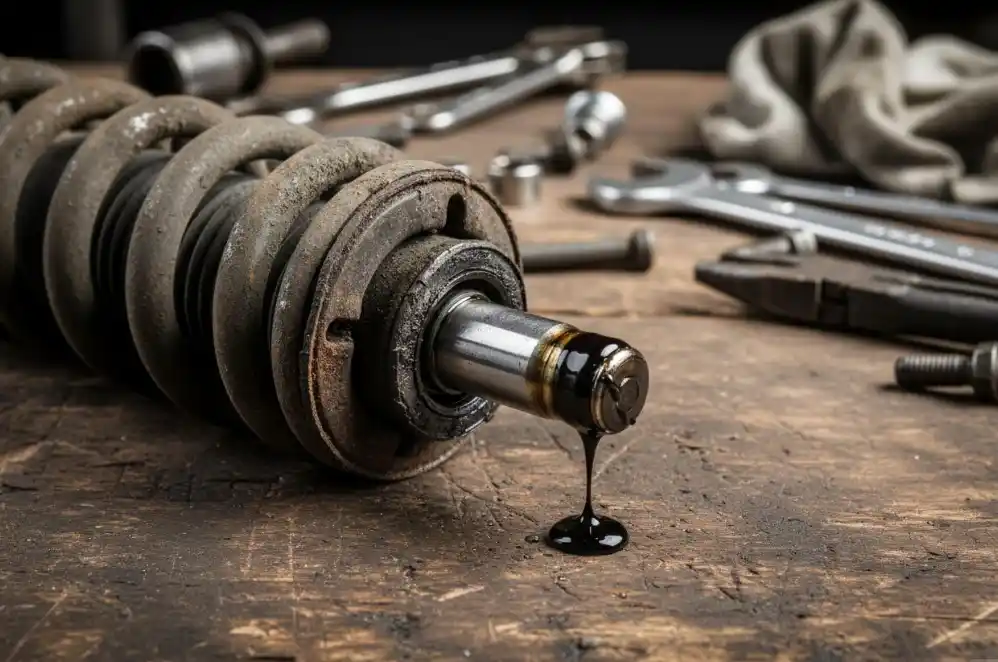
Before performing the bounce test, look for other symptoms that may indicate suspension problems.
2. The Front End Dips During Braking
Have you noticed the front of your car dipping sharply when you apply the brakes?
Worn suspension components can contribute to excessive forward movement during braking. This behavior may affect vehicle stability and make braking feel less controlled.
However, brake-related problems can also cause similar concerns. Therefore, a professional inspection is important if you notice significant changes.
3. Your Vehicle Sways During Turns
A healthy suspension helps keep your vehicle balanced when cornering. If shocks or struts become worn, the body may lean or sway more than usual.
You may notice this problem when taking corners, changing lanes, or driving through curved roads. Excessive body movement can make the vehicle feel unstable.
4. Your Tires Wear Unevenly
Suspension problems can contribute to irregular tire wear. You may notice excessive wear along certain areas of the tire tread.
However, uneven tire wear can also result from wheel alignment problems, incorrect tire pressure, or worn suspension joints. It is important to identify the actual cause before replacing any parts.
5. You Notice Fluid Leaking Around the Shocks or Struts
Take a look at the suspension components behind your wheels. If you notice oily residue or fluid leaking around a shock or strut, the component may be damaged.
Some dirt and moisture are normal around the suspension. Nevertheless, visible oil leakage deserves attention because it may indicate that the shock absorber is no longer functioning properly.
6. Your Steering or Handling Feels Different
Worn suspension components may cause your car to feel less responsive. The steering may seem less controlled, and your vehicle may feel unsettled on uneven roads.
If these symptoms become noticeable during highway driving, avoid ignoring them. A suspension inspection can help identify the source of the problem.
What Is the Suspension Bounce Test?
The bounce test is a simple preliminary check that can help identify possible problems with your vehicle’s shock absorbers or struts.
The test involves pressing down on one corner of your car and observing how the suspension responds after you release it.
When the suspension is working properly, it should control the vehicle’s movement and settle relatively quickly. However, if the vehicle continues bouncing excessively, worn shocks or struts may be a possible cause.
Keep in mind that modern vehicles have different suspension designs. Therefore, the bounce test may not reliably identify every worn suspension component.
How to Perform the Bounce Test at Home
You can perform this basic test without specialized equipment. However, always prioritize safety.
Step 1: Park on a Flat Surface
Park your vehicle on a level surface away from traffic. Make sure the car is in Park, the parking brake is engaged, and the engine is turned off.
Avoid performing the test on a slope or unstable surface.
Step 2: Choose One Corner of the Vehicle
Start with one corner of your car. The front corners are often easier to access, but you can check other corners as well.
Step 3: Press Down Firmly
Using your hands, press down firmly on a sturdy area of the vehicle body above the wheel. Do not press on fragile body panels, glass, or parts that could bend or break.
You want to make the suspension move slightly, not force the vehicle excessively.
Step 4: Release the Pressure
Once you have pushed down, release your hands and allow the suspension to return naturally.
Step 5: Observe the Movement
Watch how the vehicle settles after you release it.
If the corner rises and settles relatively quickly, the damping may be working normally. However, if it continues moving up and down several times, worn shocks or struts could be contributing to the problem.
Step 6: Compare the Other Corners
Repeat the test carefully on the other accessible corners.
If one side responds noticeably differently from the other, that difference may indicate a suspension issue that deserves further inspection.
What Does the Bounce Test Result Mean?
The results can provide useful clues, but they should not be treated as a final diagnosis.
| Bounce Test Result | What It May Indicate |
|---|---|
| The vehicle settles quickly. | Suspension damping may be functioning normally |
| Several continued bounces | Possible worn shocks or struts |
| One corner feels noticeably different. | Possible suspension wear or component imbalance |
| Little movement during the test | Not necessarily proof that the suspension is healthy |
A vehicle can pass the bounce test and still have worn suspension components. Therefore, combine this test with other symptoms, such as fluid leaks, tire wear, noises, and handling changes.
Other Suspension Checks You Can Do at Home
The bounce test is only one way to look for suspension problems. You can also check for a few visible or noticeable warning signs.
Look for Visible Fluid Leaks
Inspect the shocks or struts for signs of oil leakage. Heavy oil residue may indicate a problem with the component.
Do not crawl under a vehicle supported only by a jack. If you cannot safely inspect the suspension, leave the inspection to a professional.
Check Your Tire Wear
Look at your tires and compare the tread across the width of each tire. Uneven wear may indicate alignment or suspension-related problems.
For example, excessive wear along one edge may suggest incorrect wheel alignment. Meanwhile, irregular wear patterns may have several possible causes.
Listen for Clunking or Knocking Sounds
Pay attention when driving over bumps or uneven roads. Clunking, knocking, or rattling sounds may come from worn suspension components, loose hardware, or other mechanical issues.
These sounds do not automatically mean your shocks or struts have failed. Still, persistent noises should not be ignored.
Notice Changes in Handling
Does your car feel unstable, sway excessively, or respond differently when turning?
Changes in handling can indicate suspension wear. However, tire pressure, steering components, and alignment problems may also contribute to these symptoms.
When Is the Bounce Test Not Enough?
The bounce test can help you recognize excessive suspension movement. Unfortunately, it cannot identify every suspension problem.
Some worn shocks and struts may not cause obvious bouncing during a manual test. Additionally, other suspension components—such as control arms, bushings, ball joints, and sway bar links—can cause handling issues without producing a clear bounce-test result.
Therefore, if your vehicle shows warning signs, a professional suspension inspection is the more reliable next step.
When Should You Get a Professional Suspension Inspection?
You should arrange a professional inspection if you notice any of the following:
- Excessive bouncing after hitting bumps
- Vehicle instability at highway speeds
- Strong body sway during turns
- Uneven or unusual tire wear
- Visible oil leakage around shocks or struts
- Persistent clunking or knocking noises
- Noticeable changes in steering or handling
If your vehicle feels seriously unstable, avoid driving it until a qualified technician evaluates the problem.
Professional Suspension Repair in Houston

Suspension problems can affect ride comfort, tire wear, steering response, and vehicle stability. Although the bounce test can help you identify possible warning signs, it cannot replace a proper mechanical inspection.
At Zero Pull Alignment, identifying suspension-related issues can help determine whether your vehicle needs further inspection, component replacement, or other suspension services.
If your vehicle continues bouncing, feels unstable, or shows signs of worn suspension components, consider scheduling a professional inspection for suspension repair in Houston.
A technician can evaluate your suspension condition and determine whether shocks and struts replacement is necessary.
Getting the problem checked early may help prevent additional tire wear and reduce the risk of driving with compromised handling.
Frequently Asked Questions
How many times should a car bounce after the bounce test?
A vehicle should generally settle relatively quickly after you release pressure. Continued bouncing may indicate worn shocks or struts. However, suspension designs vary, so the test alone cannot confirm component condition.
Can I drive with bad shocks and struts?
Driving with worn shocks or struts may reduce vehicle stability, handling, and tire contact with the road. If your car feels unstable or shows serious suspension symptoms, have it inspected as soon as possible.
Does the bounce test always detect bad shocks?
No. Some worn shocks or struts may not show obvious bouncing during this test. A professional inspection may identify problems that the bounce test cannot reveal.
How long do shocks and struts usually last?
Their lifespan varies depending on driving conditions, road quality, vehicle weight, and component design. Regular driving over potholes and rough roads may cause suspension components to wear sooner.
What happens if I ignore worn suspension?
Ignoring worn suspension components may lead to poor handling, reduced stability, increased tire wear, and a less comfortable ride. In severe cases, worn suspension may affect safe vehicle control.
Final Thoughts
The suspension bounce test is a simple way to check for possible shock or strut problems at home. If your car continues bouncing, sways during turns, leaks fluid, or feels unstable, those symptoms deserve attention.
However, the bounce test is only a preliminary check. A professional inspection can help determine whether your vehicle needs shocks, struts, or other suspension repairs.
Don’t wait until suspension problems affect your driving confidence. Get your vehicle checked and address potential issues before they become more serious.
Your car
