

Replacing worn suspension components can improve your vehicle’s ride quality, steering response, and overall stability. However, installing new struts, control arms, or ball joints does not automatically restore proper wheel alignment.
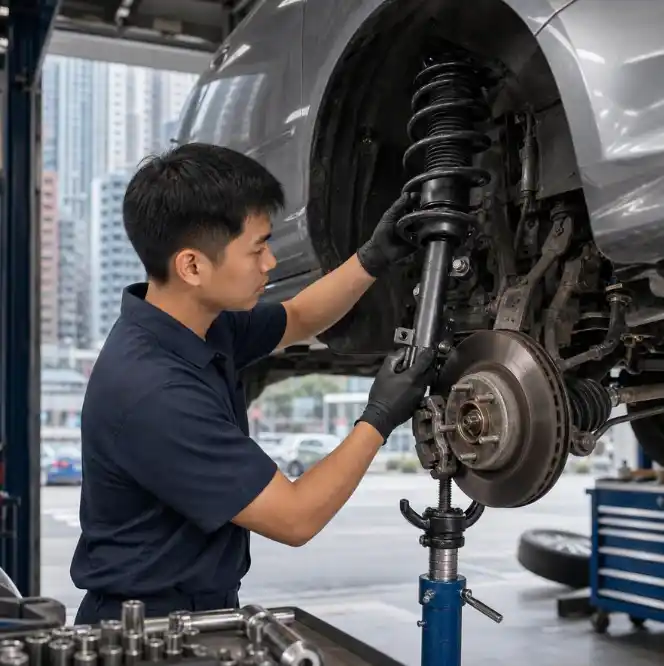
In fact, suspension repairs can change the angles at which your wheels sit and move. Even a small change in these angles may affect how your vehicle drives and how quickly your tires wear.
That is why wheel alignment is an important step after many suspension repairs. In this guide, you’ll learn why alignment matters after suspension component replacement, what can happen if you skip it, and when to schedule an alignment
.
Why Suspension Repairs Can Change Wheel Alignment
Your vehicle’s suspension system connects the wheels to the chassis and helps control movement during driving. Several components work together to maintain proper wheel position, including struts, control arms, ball joints, and other suspension parts.
When a technician replaces one of these components, the repair can affect the position of the wheel or the suspension geometry. Even if the replacement part matches the original component, the wheel angles may not return to their previous specifications automatically.
For example, removing and reinstalling suspension components can affect camber, caster, or toe. These angles influence tire contact, steering behavior, and vehicle stability.
Therefore, checking wheel alignment after suspension work helps confirm that your wheels are positioned according to the manufacturer’s specifications.
1. Why You Need an Alignment After Strut Replacement
Struts are important suspension components that help support the vehicle and control suspension movement. On many vehicles, struts also influence wheel positioning and alignment angles.
During strut replacement, technicians disconnect and reinstall components that connect the strut assembly to the steering knuckle or vehicle structure. Depending on the suspension design, this process can change camber or other alignment angles.
What Can Happen If You Skip Alignment After Strut Replacement?
Without checking alignment, your vehicle may experience:
- Uneven tire wear
- Steering wheel misalignment
- Vehicle pulling to one side
- Poor handling or stability
- Reduced tire lifespan
Even if your vehicle feels normal immediately after the repair, incorrect wheel angles can gradually damage your tires.
Getting an alignment after strut replacement helps ensure your wheels point in the correct direction and your suspension works as intended.
2. Why Control Arm Replacement Requires an Alignment Check
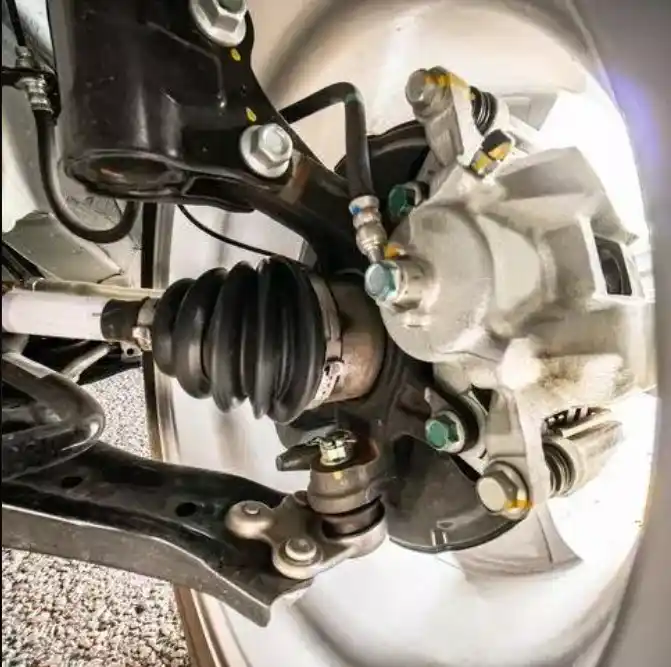
Control arms connect the wheel assembly to the vehicle’s frame or subframe. They help maintain wheel position while the suspension moves over bumps and during cornering.
When a technician replaces a control arm, the repair may affect suspension geometry. This is especially important because control arm mounting points influence the wheel’s position relative to the vehicle.
How Control Arm Replacement Affects Alignment
A new control arm may have slightly different positioning compared with the worn component. In addition, removing bolts and reconnecting suspension parts can change alignment measurements.
Depending on your vehicle’s design and the control arm being replaced, the repair may affect:
- Camber angle
- Caster angle
- Toe angle
These alignment angles play an important role in tire wear, steering response, and vehicle stability.
For this reason, checking wheel alignment after control arm replacement is an important part of completing the suspension repair.
3. Why Ball Joint Replacement Can Affect Alignment
Ball joints allow the suspension and steering components to move while maintaining a connection between them. They help the wheels move smoothly as the vehicle turns and travels over uneven surfaces.
However, worn ball joints can create excessive movement in the suspension. When you replace them, the wheel assembly may return to a different position than it occupied before the repair.
What Happens After Ball Joint Replacement?
Replacing a ball joint can affect wheel positioning, particularly when the component connects parts of the suspension that influence camber, caster, or steering geometry.
Even when the replacement restores proper mechanical movement, the wheel angles may still require adjustment.
A wheel alignment after ball joint replacement helps identify whether the repair has changed the wheel angles and whether those angles need correction.
4. What Happens If You Skip Alignment After Suspension Repair?
Skipping an alignment after suspension work may create problems that you don’t notice immediately. However, incorrect wheel angles can affect your tires and driving experience over time.
Uneven Tire Wear
Incorrect toe or camber angles can cause tires to wear faster along one edge or develop irregular tread patterns.
As a result, you may need to replace your tires sooner than expected—even though you recently invested money in suspension repairs.
Steering Wheel Not Centered
Your steering wheel may sit crooked when driving straight. This can happen when the wheel angles are not properly adjusted after suspension work.
A crooked steering wheel may also indicate that the alignment needs further correction.
Vehicle Pulling to One Side
If your vehicle pulls left or right on a reasonably straight road, incorrect alignment angles may be one possible cause.
However, tire pressure differences, tire problems, brake issues, and other mechanical conditions can also cause pulling.
Poor Handling and Driving Stability
Incorrect alignment can affect how your vehicle responds during steering and cornering. You may notice that the steering feels less precise or that the vehicle does not track straight as expected.
Correct alignment helps maintain predictable handling and proper tire contact with the road.
Reduced Tire Lifespan
Tires are expensive. Incorrect wheel angles can create unnecessary friction and uneven tread wear.
By checking alignment after suspension repair, you can help protect your new suspension components and your tires from avoidable wear.
5. Which Wheel Alignment Angles Matter After Suspension Repair?
A professional wheel alignment checks several angles that affect wheel positioning and driving behavior.
Camber
Camber describes how much the top of the wheel tilts inward or outward when viewed from the front of the vehicle.
Incorrect camber may contribute to uneven tire wear, particularly along the inner or outer edges of the tread.
Caster
Caster refers to the angle of the steering axis when viewed from the side of the vehicle.
Proper caster helps support steering stability and return-to-center behavior. Depending on the suspension design, suspension component replacement may affect caster measurements.
Toe
Toe describes whether the front edges of the tires point inward or outward when viewed from above.
Incorrect toe is a common cause of rapid tire wear because the tires may scrub against the road instead of rolling properly.
After suspension repair, checking these angles helps determine whether the vehicle needs adjustment.
6. When Should You Get an Alignment After Suspension Repair?
In most cases, you should have wheel alignment checked after replacing suspension components that can affect wheel geometry.
Common repairs that may require an alignment check include:
- Strut replacement
- Control arm replacement
- Ball joint replacement
- Tie rod replacement
- Steering component replacement
- Other suspension repairs that affect wheel positioning
The best time to perform the alignment is after the suspension repair is complete and the components are properly installed.
This allows the technician to measure the vehicle’s actual wheel angles and make adjustments based on its current suspension condition.
If several suspension components are worn, repairing them before alignment is generally important. Otherwise, loose or worn parts may prevent the technician from obtaining stable alignment readings.
7. Can You Drive Without an Alignment After Suspension Repair?
Your vehicle may still drive after suspension component replacement without an alignment. However, that does not mean the wheel angles are correct.
You may notice a crooked steering wheel, vehicle pulling, or unusual tire wear. In some cases, the symptoms may not be obvious until you drive for a longer period.
Driving with incorrect alignment can cause unnecessary tire wear and may affect handling.
If you have recently replaced struts, control arms, or ball joints, it is better to schedule an alignment check rather than assume everything is correct.
8. Suspension Repair and Wheel Alignment: Why Both Matter
Suspension repair and wheel alignment perform different jobs.
Suspension repair restores or replaces worn mechanical components. Wheel alignment adjusts the wheel angles to help the vehicle meet the manufacturer’s alignment specifications.
Replacing worn suspension parts without checking alignment may leave the vehicle with incorrect wheel angles. On the other hand, performing alignment before repairing loose or damaged suspension components may not produce reliable results.
For the best outcome, address worn suspension components first and then check wheel alignment.
This approach helps restore proper suspension function, improve steering behavior, and reduce the risk of premature tire wear.
Professional Suspension Repair and Wheel Alignment in Houston
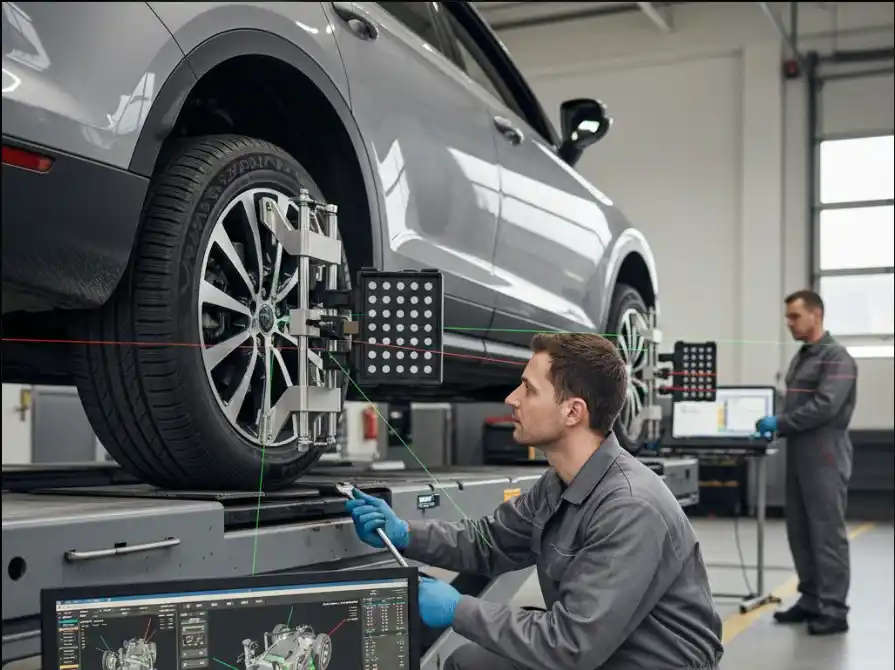
If your vehicle needs struts, control arms, or ball joints replaced, don’t overlook wheel alignment after the repair.
At Zero Pull Alignment, suspension-related concerns should be evaluated alongside wheel positioning and handling symptoms. A proper inspection helps determine whether worn components need replacement and whether your vehicle requires alignment afterward.
If your vehicle needs suspension component replacement, addressing the mechanical problem first can help prepare it for an alignment check.
Once the suspension components are in proper condition, a precision wheel alignment can help bring the wheel angles back within the manufacturer’s recommended specifications.
Don’t risk unnecessary tire wear or poor handling by skipping the alignment check after suspension work. Complete your repair with an alignment inspection to help your vehicle drive straight, handle properly, and protect your tires.
Frequently Asked Questions
Do I need an alignment after replacing struts?
In many cases, yes. Strut replacement can affect wheel alignment angles, depending on the suspension design and how the strut connects to other components. An alignment check helps confirm that the wheel angles remain within specifications.
Do control arms affect wheel alignment?
Yes. Control arms help position the wheel relative to the vehicle. Replacing a control arm can change suspension geometry, which is why checking alignment after replacement is recommended.
Do I need an alignment after ball joint replacement?
An alignment check is recommended after ball joint replacement because the repair may affect wheel positioning and alignment angles, depending on the vehicle’s suspension design.
How soon should I get an alignment after suspension repair?
You should arrange an alignment check after completing the suspension repair, preferably before driving extensively on the vehicle. This helps identify incorrect wheel angles before they contribute to additional tire wear.
Can new suspension parts fix alignment problems?
New suspension components can correct problems caused by worn or damaged parts. However, replacing them does not automatically guarantee correct wheel alignment. The angles still need to be measured and adjusted when necessary.
What happens if I don’t get an alignment after replacing suspension parts?
Your vehicle may develop uneven tire wear, steering wheel misalignment, poor handling, or pulling to one side. These issues can lead to additional tire expenses and affect driving comfort.
Final Thoughts
Replacing struts, control arms, or ball joints is an important step toward restoring your vehicle’s suspension. However, suspension repairs and wheel alignment work together to maintain proper wheel positioning and handling.
After replacing suspension components, don’t assume your alignment is still correct. A professional alignment check can identify changes in camber, caster, and toe before they contribute to uneven tire wear or steering problems.
Complete your suspension repair with an alignment inspection and help your vehicle maintain stable handling, proper tire wear, and predictable steering response.
