

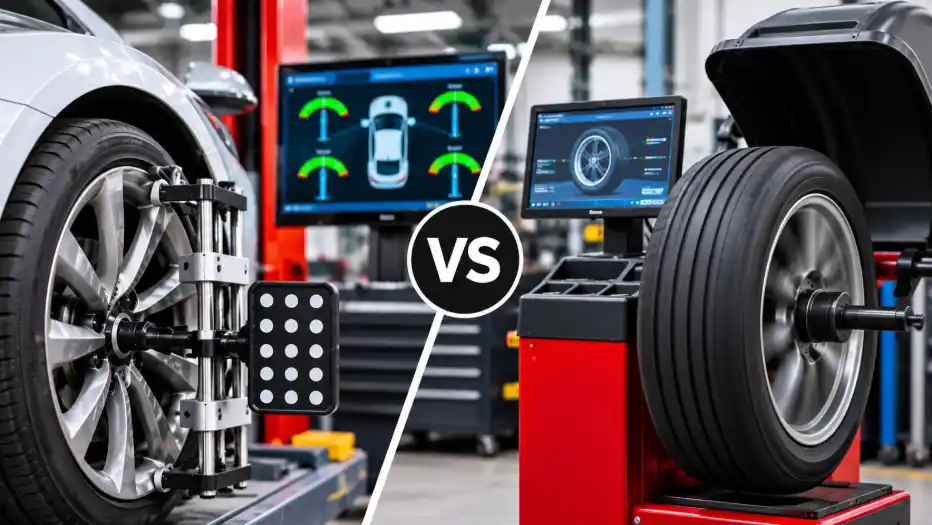
Have you noticed your car pulling to one side, shaking at highway speeds, or wearing out its tires unevenly? These problems can make driving uncomfortable and may indicate that your vehicle needs professional attention.
Two common services that help address these issues are wheel alignment and tire balancing. Although they are often mentioned together, each service solves a different problem.
Understanding wheel alignment vs. tire balancing can help you identify the service your vehicle actually needs. In this guide, we will explain how both services work, the warning signs to watch for, and when you may need one or both.
If you are experiencing steering or tire problems, professional computerized wheel alignment in Houston can help identify alignment-related issues before they lead to more serious tire wear.
1. What Is Wheel Alignment?
Wheel alignment is the process of adjusting your vehicle’s wheel angles to match the manufacturer’s recommended specifications. These adjustments help your tires maintain proper contact with the road while supporting stable handling and predictable steering.
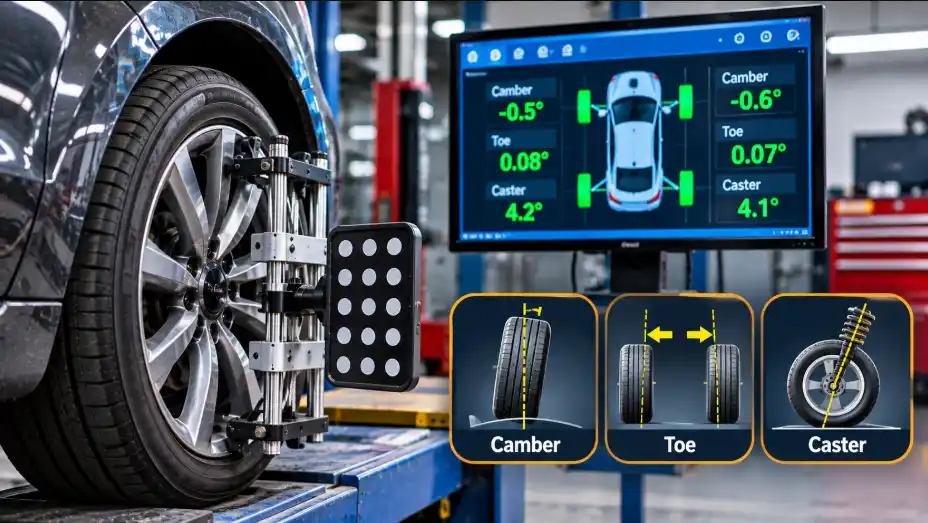
During an alignment service, technicians typically inspect three important angles:
- Camber: The inward or outward tilt of a tire when viewed from the front of the vehicle.
- Toe: The direction your tires point when viewed from above. They may point slightly inward or outward.
- Caster: The angle of the steering axis when viewed from the side of the vehicle. It helps support steering stability and return-to-center behavior.
When these angles move outside the recommended specifications, your vehicle may not handle as smoothly as it should.
For example, incorrect toe settings can cause excessive tire wear. Similarly, improper camber may contribute to uneven wear along the inside or outside edges of a tire.
A professional alignment inspection helps identify these issues and determine which adjustments are necessary.
2. What Is Tire Balancing?
Tire balancing is a service that corrects uneven weight distribution in the tire and wheel assembly.
Even a small weight difference around a wheel can create vibration as the tire rotates. This problem often becomes more noticeable when driving at higher speeds.
To correct the imbalance, a technician places the tire and wheel assembly on a specialized balancing machine. The machine identifies areas where weight distribution is uneven. Small balancing weights are then attached to the wheel to help achieve proper balance.
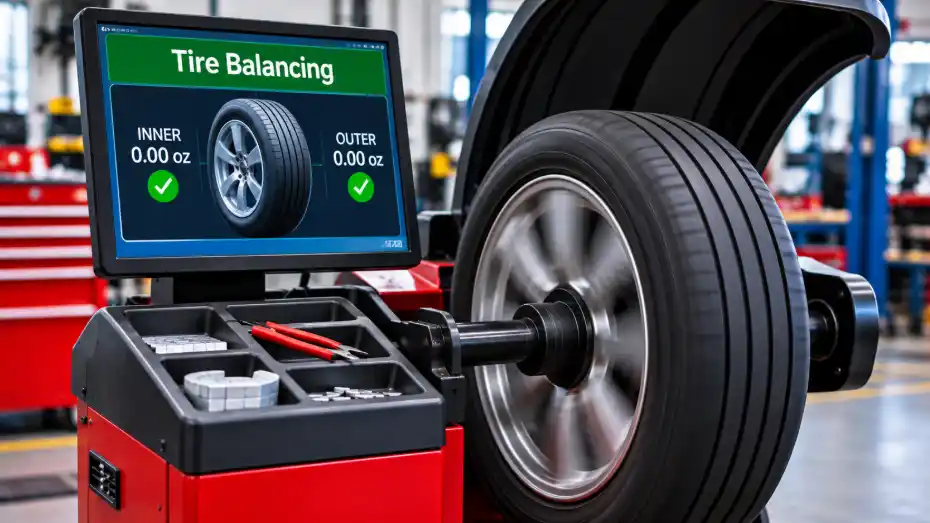
As a result, properly balanced tires can provide:
- Smoother driving at different speeds.
- Reduced steering wheel vibration caused by imbalance.
- Less unnecessary stress on certain suspension and steering components.
- More comfortable highway driving.
However, tire balancing does not correct incorrect wheel angles. That is why it is important to understand the difference between these two services.
3. Wheel Alignment vs Tire Balancing: Key Differences
Although both services help improve driving comfort and tire performance, they address different mechanical problems.
The main difference is simple: wheel alignment corrects wheel angles, while tire balancing corrects uneven weight distribution.
Here is a quick comparison:
| Feature | Wheel Alignment | Tire Balancing |
|---|---|---|
| Main purpose | Corrects wheel angles | Corrects weight distribution |
| Common symptoms | Vehicle pulling and uneven tire wear | Speed-related vibration |
| Equipment used | Computerized alignment system | Tire balancing machine |
| Main adjustments | Camber, toe, and caster are adjustable. | Small balancing weights |
| Primary benefit | Better steering and tire contact | Smoother driving |
| Typical reason for service | Incorrect alignment angles | Imbalanced tire and wheel assembly |
In other words, these services are not interchangeable. Your vehicle may need one service or both, depending on the symptoms and inspection results.
4. Signs Your Vehicle Needs Wheel Alignment
Poor wheel alignment can affect how your vehicle handles and how evenly your tires wear.
Watch for the following warning signs:
Your Vehicle Pulls to One Side
If your vehicle consistently moves toward the left or right while driving on a reasonably level road, incorrect alignment may be one possible cause.
However, tire pressure differences, road conditions, brake problems, and suspension issues can also cause pulling.
Your Steering Wheel Is Off-Center
Does your vehicle travel straight while the steering wheel remains tilted to one side? This may indicate an alignment problem.
A proper inspection can help determine whether the steering position and wheel angles meet the manufacturer’s specifications.
Uneven Tire Wear
Incorrect wheel angles can cause certain areas of your tires to wear faster than others.
For instance, excessive wear along the inside or outside edge may indicate an alignment-related issue. Checking your tires regularly can help you recognize this problem early.
Your Steering Feels Unstable
If your vehicle feels less predictable during normal driving, alignment may be worth checking. Nevertheless, worn suspension components or steering problems can produce similar symptoms.
5. Signs Your Vehicle Needs Tire Balancing
Unlike alignment problems, tire imbalance commonly creates vibration while the vehicle is moving.
Here are some signs that your tires may need balancing:
Steering Wheel Vibration
One of the most recognizable symptoms is vibration in the steering wheel, particularly when driving at certain speeds.
For example, you may notice shaking when traveling on the highway, even though the vehicle feels relatively smooth at lower speeds.
Vibration in the Seat or Floor
Sometimes, the vibration is more noticeable through the driver’s seat, passenger seat, or vehicle floor.
This can happen when an imbalanced wheel creates vibration through the vehicle as it rotates.
Vibration That Changes With Speed
Tire imbalance may become more noticeable as your driving speed increases. The vibration can also change depending on the speed at which the wheel rotates.
Still, vibration does not always mean your tires need balancing. Damaged tires, bent wheels, worn suspension parts, and other mechanical problems may create similar symptoms.
For that reason, a proper inspection is important before choosing a service.
6. Can You Need Wheel Alignment and Tire Balancing at the Same Time?
Yes. In some situations, your vehicle may need both services.
For example, imagine that you recently installed a new set of tires. During installation, the tire and wheel assemblies may need balancing to correct uneven weight distribution.
At the same time, your vehicle may have incorrect alignment angles from previous driving conditions or worn suspension components.
In this situation, balancing alone will not correct the alignment problem. Likewise, an alignment service will not remove vibration caused by an imbalanced tire.
Therefore, both services may be necessary when an inspection confirms separate problems.
A technician can evaluate your tires, wheel angles, and related components to recommend the appropriate service.
7. What Can Cause Wheel Alignment and Tire Balancing Problems?
Several driving conditions and mechanical issues can affect alignment or tire balance over time.
Common causes include:
- Potholes and rough roads: Hitting potholes or road obstacles can affect wheel alignment or damage a wheel or tire.
- Curb impacts: Striking a curb may affect suspension or steering components.
- Tire replacement: Newly installed tires may require proper balancing.
- Suspension wear: Worn or damaged suspension components can affect alignment and vehicle handling.
- Normal driving conditions: Everyday road use can gradually contribute to changes in alignment.
- Improper installation: Incorrect tire mounting or balancing can create vibration.
Additionally, a bent wheel or damaged tire may cause symptoms that look similar to alignment or balancing problems.
That is why identifying the actual cause is more important than guessing which service your vehicle needs.
8. How Often Should You Check Wheel Alignment and Tire Balancing?
There is no single service interval that applies to every vehicle. The right schedule depends on your vehicle manufacturer’s recommendations, driving conditions, tire condition, and suspension health.
However, you should consider an inspection when:
- You notice uneven tire wear.
- Your vehicle starts pulling to one side.
- The steering wheel becomes off-center.
- You experience unusual vibration while driving.
- You replace tires or have certain suspension or steering components repaired.
- Your vehicle experiences a significant impact with a pothole or curb.
For tire balancing, an inspection may be appropriate when installing new tires or when vibration develops.
Most importantly, do not ignore unusual steering or vibration symptoms. Early inspection can help identify problems before they contribute to additional tire or component wear.
9. Why Professional Wheel Alignment Matters
Correct wheel alignment helps your vehicle maintain the recommended wheel angles for stable handling and proper tire contact.
A professional inspection uses specialized equipment to measure the current alignment settings and compare them with the vehicle manufacturer’s specifications.
At Zero Pull Alignment in Houston, drivers can get assistance identifying alignment-related problems and determining the adjustments their vehicles may need.
Professional precision 4-wheel alignment can help address alignment concerns across the vehicle’s wheels, based on the manufacturer’s specifications and the vehicle’s design.
The goal is to help your vehicle drive more consistently while reducing avoidable tire wear caused by incorrect alignment angles.
10. Get the Right Service for Your Vehicle at Zero Pull Alignment
Understanding wheel alignment vs tire balancing makes it easier to recognize why your vehicle may be pulling, vibrating, or wearing tires unevenly.
Remember, wheel alignment corrects wheel angles, while tire balancing addresses uneven weight distribution. Although the symptoms can sometimes overlap, the solutions are different.
If you are experiencing steering problems, unusual vibration, or uneven tire wear, getting your vehicle inspected is a sensible next step.
Zero Pull Alignment provides wheel alignment services for drivers in Houston, TX.
Do not wait for a small driving issue to become a bigger problem. Get your vehicle checked and find out which service it needs.
Call Zero Pull Alignment: (346) 916-2567
Book your appointment online today!
Frequently Asked Questions
1. What is the main difference between wheel alignment and tire balancing?
Wheel alignment adjusts the angles of your vehicle’s wheels to meet manufacturer specifications. Tire balancing corrects uneven weight distribution in the tire and wheel assembly. Both services improve driving performance, but they solve different problems.
2. Can bad wheel alignment cause car vibration?
Incorrect wheel alignment can contribute to handling problems and uneven tire wear. However, vibration is more commonly associated with tire imbalance, damaged tires, bent wheels, or other mechanical issues. A proper inspection can help identify the cause.
3. Does tire balancing fix uneven tire wear?
Tire balancing helps correct vibration caused by uneven weight distribution. However, it does not correct wheel angles. If your tires are wearing unevenly, an alignment inspection may be necessary.
4. How do I know if I need wheel alignment or tire balancing?
If your vehicle pulls to one side, your steering wheel is off-center, or your tires show uneven wear, an alignment inspection may be appropriate. On the other hand, vibration that becomes noticeable at certain speeds may indicate a balancing issue. A technician can inspect your vehicle to confirm the cause.
5. Should I get wheel alignment after installing new tires?
Installing new tires does not automatically mean your vehicle needs an alignment. However, checking alignment during tire replacement can help identify incorrect wheel angles that may contribute to uneven tire wear. New tire and wheel assemblies should also be balanced properly.
6. How much does wheel alignment cost in Houston?
Wheel alignment costs vary depending on the vehicle, alignment requirements, and any additional adjustments or repairs needed. Contact Zero Pull Alignment for information about service options for your vehicle.
7. Can I drive with bad wheel alignment?
You may still be able to drive with incorrect alignment, but doing so can contribute to uneven tire wear and poor handling. If your vehicle pulls strongly, feels unstable, or has unusual steering behavior, arrange an inspection as soon as possible.
